

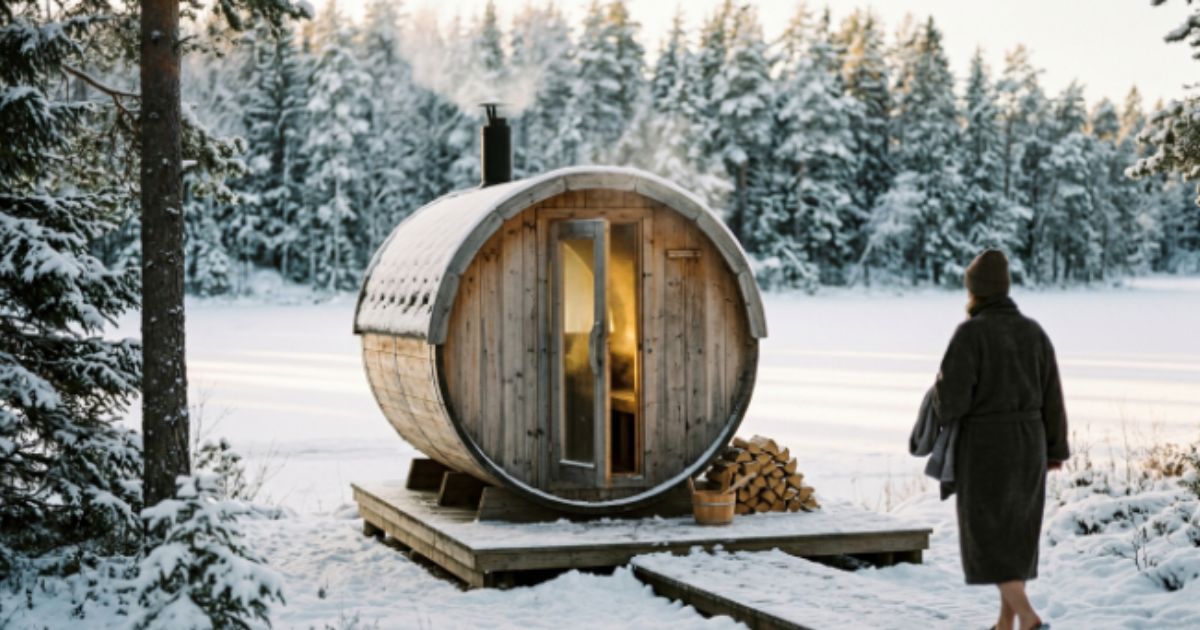
Outdoor saunas are becoming a popular way to turn an ordinary backyard into a relaxing backyard wellness space. Whether you want a quiet place to unwind, support muscle recovery, or create a private wellness routine, the right sauna can add comfort and value to your home. Today, you can choose from many styles, including a traditional Finnish sauna, outdoor barrel sauna, and outdoor infrared sauna.
Each option offers different features, heating methods, sizes, and installation needs. Before buying, it’s important to understand materials, insulation, ventilation, safety, costs, and local requirements. This guide explores the best outdoor saunas, their benefits, popular types, buying considerations, installation tips, maintenance needs, and safety essentials.
Best Outdoor Saunas of 2026: Top Picks Compared
The best outdoor saunas of 2026 come in several shapes and heating styles. A barrel design may suit a small garden, while a cabin-style sauna works better when you want more usable wall space and a conventional room layout. For buyers who want a classic experience, a traditional outdoor sauna with an electric or wood-fired heater remains a strong choice. People who prefer lower operating temperatures may instead look at an outdoor infrared sauna. The smartest purchase starts with how you expect to use the sauna rather than its marketing label.
| Outdoor sauna type | Best for | Typical capacity | Main advantage | Main consideration |
| Outdoor barrel sauna | Small or medium yards | 2–6 people | Compact footprint and distinctive design | Curved interior limits wall space |
| Outdoor sauna cabin | Families and regular use | 2–8+ people | Roomy, flexible layout | Usually needs more space |
| Outdoor infrared sauna | Lower-temperature heat | 1–4 people | Infrared heating experience | Outdoor suitability varies by model |
| Wood-fired outdoor sauna | Traditional sauna fans | 2–8+ people | Authentic fire-heated experience | Chimney, fire safety, and wood storage |
| Electric outdoor sauna | Convenience | 1–8+ people | Precise controls and easy operation | Requires appropriate electrical service |
| Portable outdoor sauna | Temporary or flexible use | Usually 1–2 people | Easy to relocate | Often less durable than permanent structures |
| Luxury outdoor sauna | Premium backyard projects | 4–10+ people | High-end materials and features | Higher purchase and installation cost |
For a first-time buyer, the most important comparison is between a barrel sauna, cabin sauna, and traditional rectangular sauna. Barrel designs can heat efficiently because their curved shape reduces unused space. A cabin design gives you more freedom with benches, windows, changing areas, and accessories. Meanwhile, a custom outdoor sauna room can be built around your exact backyard. Product specifications vary widely, so check the manufacturer’s heater rating, dimensions, electrical requirements, warranty, and installation manual before ordering. For example, a current residential sauna specification from Almost Heaven lists a 6 kW, 240-volt heater requiring a 30-amp hardwired connection, showing why electrical planning should happen before purchase rather than after delivery
Types of Outdoor Saunas: Which One Is Right for You?
The word sauna covers several different heating experiences. A traditional sauna heats the room and the objects inside it, including the sauna benches and sauna stones, while an infrared sauna uses infrared energy to warm the body more directly. A Finnish sauna typically refers to the traditional dry sauna tradition associated with Finland. Adding water to hot stones can increase humidity for short periods, although that doesn’t turn every traditional sauna into a steam sauna. A true outdoor steam sauna requires equipment and construction designed specifically to handle much higher moisture levels. That distinction matters because outdoor moisture management is already a major part of sauna design.
Outdoor Barrel Sauna
An outdoor barrel sauna has a rounded profile that looks striking beside a lawn, pool, deck, or garden. Its compact footprint makes it attractive when you want a sauna for backyard use without building a large rectangular structure. A quality barrel-style sauna can also provide a simple interior with benches running along the curved walls. However, the shape isn’t perfect for everyone. Curved walls reduce conventional storage and can make the upper seating area feel less spacious than the same exterior footprint in a cabin design.
Outdoor Cabin Sauna
An outdoor sauna cabin offers a more familiar room shape. Because the walls are vertical, you get greater freedom when placing a sauna bench, heater, windows, lighting, and accessories. This makes a cabin sauna especially useful for families or anyone planning a longer-term backyard wellness space. A well-insulated cabin can also be easier to customize with a changing area, covered entry, or nearby shower. If you want the sauna to feel like a small building rather than a standalone product, the cabin format is usually the more flexible starting point.
Outdoor Infrared Sauna
An outdoor infrared sauna works differently from a traditional heated room. Instead of relying mainly on hot air and heated stones, infrared panels emit infrared energy that warms the body. A full-spectrum infrared sauna may combine different infrared wavelengths, depending on the manufacturer. Buyers should pay close attention to whether the specific unit is actually designed and rated for outdoor exposure. An indoor infrared cabin placed under a roof isn’t automatically an outdoor-rated product. Rain, humidity, temperature swings, and electrical protection can dramatically change the installation requirements.
Traditional Outdoor Sauna
A traditional Finnish sauna provides the familiar hot-room experience associated with sauna culture. An electric heater warms sauna rocks or sauna stones, and users can add small amounts of water when the heater and stones are designed for it. A dry sauna usually has relatively low humidity compared with a steam room, although humidity can temporarily rise when water touches the stones. A traditional outdoor model can be especially rewarding if you enjoy the ritual of heating the room, sitting on a wooden sauna bench, sweating, cooling down, and repeating the process.
Wood-Burning Outdoor Sauna
A wood-fired outdoor sauna uses a wood-burning stove instead of an electric heating element. It creates a distinctive experience because you build and manage the fire yourself. Many enthusiasts like the gradual heat and atmosphere that come with burning wood. Yet the romantic side comes with practical responsibilities. The stove, chimney, clearances, hearth, ventilation, and fire protection must follow the manufacturer’s instructions and applicable local requirements. Fuel storage also matters. A wood-burning design isn’t the best choice if you want to press a button and have the sauna ready with minimal effort.
Electric Outdoor Sauna
An electric sauna is often the easiest permanent option for homeowners who value convenience. An electric heater can offer predictable heating and precise sauna controls, including timers and temperature settings. The tradeoff is electrical infrastructure. A larger heater may need a dedicated 240-volt circuit and professional wiring. Never assume that an existing outdoor outlet can support the heater. The correct circuit depends on the heater’s rated load and the applicable electrical requirements.
Portable Outdoor Sauna
A portable outdoor sauna can make sense when you rent a property, have limited space, or want to test sauna use before committing to a permanent building. Its lower structural commitment is appealing. However, portable products vary enormously in insulation, durability, weather resistance, heater design, and electrical safety. A temporary enclosure shouldn’t be judged by the same standards as a permanent outdoor sauna structure. If you want daily use for many years, a properly constructed permanent sauna usually deserves closer consideration.
Benefits of Having an Outdoor Sauna
The biggest benefit of outdoor saunas may be surprisingly simple: they create a dedicated place for heat, quiet, and routine. A backyard unit separates the experience from normal household activity. Instead of turning part of a bathroom or basement into a hot room, you can step outside into a purpose-built outdoor sauna retreat. That physical separation can make the sauna feel more like a ritual. You heat the room, leave your phone behind, sit quietly, cool down, and return refreshed.
Sauna bathing also produces clear short-term physiological responses. Heat raises body temperature and heart rate while causing blood vessels to widen. Research has linked sauna bathing with cardiovascular effects and several possible long-term health associations, although observational research cannot prove that sauna use itself causes those outcomes. A 2020 meta-analysis found acute increases in body temperature and heart rate after sauna exposure alongside short-term blood-pressure changes. More recent randomized-trial evidence is more mixed, so sauna should be viewed as a potential wellness tool rather than a cure-all
Relaxation and Stress Relief
A quiet sauna session can become a useful form of relaxation. The combination of heat, reduced distractions, and a short period away from daily tasks creates a natural pause in the day. That can support stress relief and mental relaxation, although individual responses differ. The best results often come from treating sauna time as part of a broader wellness routine rather than expecting one session to transform your health.
Muscle Recovery
Many active people use sauna as part of a recovery routine. Heat increases skin blood flow and creates cardiovascular stress that resembles some responses to light physical activity. Research on post-exercise heat exposure remains developing, and a recent systematic review found that evidence for improved acute recovery and long-term performance adaptations isn’t yet definitive.
That doesn’t make sauna useless for athletes. It simply means the claim should stay grounded. If you enjoy heat after training and tolerate it well, sauna can complement sleep, hydration, nutrition, mobility work, and other recovery methods. It shouldn’t replace them.
Circulation and Cardiovascular Health
Heat causes vasodilation, meaning blood vessels expand. This changes circulation and cardiovascular workload during the session. Research has reported associations between regular sauna bathing and cardiovascular health, but the strength of evidence varies by outcome. A major review in Mayo Clinic Proceedings described promising cardiovascular associations while also noting important areas of uncertainty.
A useful way to think about sauna is as heat therapy, not medicine. The body responds to heat as a physical stressor. With sensible use, that response may complement an active lifestyle. It doesn’t erase the need for exercise, good nutrition, sleep, or medical treatment.
Sleep and Evening Relaxation
Some sauna users prefer an evening session because the transition from intense heat to normal room temperature can feel calming. Research into sauna and sleep quality continues to develop, so strong promises would be premature. Still, creating a predictable wind-down ritual can be valuable. The sauna becomes the boundary between a busy day and a quieter evening.
A Better Backyard Wellness Space
A well-designed sauna for outdoor space can anchor an entire backyard wellness project. Imagine a cedar sauna beside a small deck with an outdoor shower and seating area. Add landscaping and soft lighting and the result becomes an outdoor wellness retreat, not simply a heater inside a wooden box. Some homeowners also pair a sauna with a cold plunge. The popular idea of sauna and cold plunge sessions falls under contrast therapy, but rapid hot-to-cold exposure isn’t suitable for everyone. People with cardiovascular concerns should discuss such practices with a healthcare professional. The American Heart Association specifically cautions against alternating cold water and hot tubs or saunas for people with high blood pressure.
What to Look for When Buying an Outdoor Sauna
A good outdoor sauna buying guide starts with the shell and ends with the small details. Look beyond photographs. Ask how thick the walls are, what type of sauna wood the manufacturer uses, how the roof handles rain and snow, how the floor drains, what insulation sits inside the walls, and whether the heater has the capacity to heat the space efficiently. The best weather-resistant sauna isn’t necessarily the most expensive one. It is the one whose materials and construction match the environment where you plan to install it.
The interior deserves equal attention. A comfortable sauna bench needs enough depth to sit or recline safely. Two-level seating gives users different heat zones because temperature generally increases higher in the room. A backrest can make longer sessions more comfortable. Glass doors and tempered glass windows can bring in natural light, but larger glass areas can increase heat loss. Modern models may add digital controls, smart controls, Wi-Fi controls, Bluetooth speakers, LED lighting, or chromotherapy lighting. These extras can be enjoyable, but they shouldn’t distract you from build quality, heater compatibility, insulation, ventilation, and warranty support.
Sauna Size and Capacity
Capacity sounds straightforward until you sit inside the room. A manufacturer may describe a model as a four-person unit, yet four adults may find the benches tight if they want to lie down. A two-person outdoor sauna can be excellent for couples and smaller yards. A four-person outdoor sauna gives more flexibility for families and guests. A five-person sauna may work well when social use matters, but it needs a larger footprint and a heater sized for the volume and glass area.
Check the actual interior sauna dimensions, not just the exterior footprint. Measure bench width, bench depth, ceiling height, door swing, and available standing space. If you plan to stretch out, calculate the usable bench length. Capacity labels are helpful, but physical dimensions tell the real story.
Sauna Materials and Wood
Popular sauna materials include Western red cedar, Nordic spruce, Scandinavian softwood, hemlock, and pine. Cedar is widely valued for its aroma and natural resistance characteristics. Spruce and other softwoods are common in Scandinavian-style construction. Thermally modified wood has undergone controlled heat treatment that changes some of its physical properties, making thermowood an increasingly popular choice for exterior applications.
No wood is maintenance-free outdoors. Even durable weather-resistant wood needs sensible moisture management. The roof should shed water, the foundation should keep the structure above standing water, and exposed surfaces need a finish compatible with the manufacturer’s recommendations. Avoid treating interior sauna surfaces with ordinary products unless the manufacturer specifically permits them. Heat can change how coatings behave.
Sauna Insulation and Heat Retention
Good sauna insulation improves comfort and reduces the amount of energy needed to maintain sauna heat. Properly designed insulated walls slow heat transfer through the building envelope. However, insulation alone doesn’t guarantee efficiency. Air leakage, oversized windows, poor door seals, weak roof construction, and inadequate ventilation can undermine performance.
The ideal balance involves heat retention and controlled air exchange. An airtight construction strategy shouldn’t mean sealing the room so tightly that fresh air cannot enter. Proper sauna ventilation brings in fresh air and removes stale, humid air. The exact vent arrangement depends on the heater, sauna design, and manufacturer’s instructions.
Sauna Heater and Controls
The sauna heater is the heart of a traditional sauna. Its output must match the room volume and construction. A heater that’s too small may struggle to reach the desired sauna temperature, especially in winter. A heater that’s too large may cost more and require greater electrical capacity than necessary.
Read the heater specifications carefully. The maximum temperature, temperature range, heat-up time, controls, stone capacity, and electrical load all matter. A 220V sauna, 240V sauna, or 110V sauna should never be selected based solely on convenience. The home’s available electrical service and the heater’s exact specifications must agree.
Sauna Accessories
The best sauna accessories are the ones that improve comfort or help you monitor conditions. A sauna bucket and sauna ladle suit traditional water-on-stone use. A thermometer helps you understand the room’s actual temperature rather than guessing. A hygrometer can also help track humidity, particularly when water is used on the stones.
Modern accessories can turn a simple sauna into a premium retreat. Bluetooth speakers, LED lighting, and digital controls add convenience. However, every accessory installed in a hot and humid environment needs to be rated for that environment. Ordinary household electronics don’t automatically belong inside a sauna.
Warranty and Build Quality
A long warranty can be useful, but it shouldn’t become the only measure of quality. Check what the warranty actually covers. Some manufacturers separate coverage for the structure, heater, controls, and accessories. Also examine the exclusions. Outdoor exposure, unauthorized modifications, poor maintenance, or incorrect installation may affect coverage.
The real test is build quality. Look at joinery, door construction, roof details, fasteners, drainage, bench supports, and heater installation. Strong durability comes from many small decisions working together.
Outdoor Sauna Installation: What You Need to Know
Successful outdoor sauna installation starts before the sauna arrives. First, choose a location that has stable ground, good drainage, sensible access, and enough clearance for the structure and equipment. Think about the path from your house to the sauna in winter. A location that looks beautiful in July may feel inconvenient after a foot of snow. Consider privacy too. You want the sauna to feel like a retreat rather than a display case in the middle of the yard.
The next stage is sauna site preparation. A stable base helps prevent movement, moisture problems, and structural stress. Depending on the design and local rules, the base may involve a concrete slab, paver foundation, or reinforced deck. Some prefabricated kits have their own foundation requirements. Don’t improvise. Follow the manufacturer’s instructions and confirm local requirements before construction begins.
Choosing the Best Sauna Placement
Good sauna placement balances sunlight, privacy, drainage, access, and utilities. Morning sun can be pleasant, while afternoon shade may reduce heat exposure on the exterior. In snowy regions, consider where the roof will shed snow. In rainy climates, avoid low spots where water collects.
Your backyard placement also affects electrical costs. A sauna far from the home’s electrical panel may require a longer underground run or additional electrical work. The shortest route isn’t always the best route, though. The electrician must follow applicable code requirements for the installation.
Sauna Foundation
A proper sauna foundation supports the structure and helps isolate it from wet ground. A solid foundation is particularly important for larger cabins because uneven settlement can affect doors, walls, and roofing.
A concrete slab offers a durable option for many permanent installations. Pavers can work for certain prefabricated units when installed over a properly prepared base. A reinforced deck may be suitable for some lighter structures if its design and load capacity support the sauna. The manufacturer’s specifications should determine the final approach.
Electrical Requirements
Electrical work is one area where DIY enthusiasm should give way to professional judgment. A larger electric sauna can draw substantial power. Some heaters require dedicated 240-volt circuits and hardwiring. A current sauna product specification, for example, lists a 6 kW heater with a 240-volt, 30-amp requirement.
The exact electrical requirements depend on the heater and local electrical code. A licensed electrician can determine conductor sizing, breaker requirements, disconnect needs, grounding, and outdoor wiring methods. Don’t assume a 110V outlet is adequate because the sauna lights use a standard plug. The heater is usually the major electrical load.
Ventilation Requirements
Proper sauna ventilation serves comfort and air quality. An intake vent supplies fresh air while an exhaust vent allows stale air and moisture to leave. The exact placement depends on the heater and sauna design. Some systems use mechanical assistance while others rely on natural air movement.
Follow the manufacturer’s ventilation requirements exactly. A generic internet diagram isn’t a substitute for the installation manual because heater designs differ.
Permits and Local Rules
Permit requirements vary by jurisdiction. Some locations may treat a small prefabricated sauna differently from a permanent accessory structure. Setbacks, lot coverage, electrical work, fire safety, plumbing, and zoning can all affect the project. Building codes, permits, and HOA requirements may apply.
Before buying the structure, contact your local building department and ask what applies to your property. UL Solutions notes that code compliance can involve model building, fire, mechanical, electrical, and energy codes, with local authorities responsible for determining compliance in specific installations
DIY or Professional Installation?
An outdoor sauna kit can make assembly much easier because major components arrive pre-cut and designed to fit together. However, kit assembly isn’t the same as installing every system yourself. A homeowner might comfortably assemble walls and benches while hiring professionals for the foundation, electrical work, chimney, or other specialized tasks.
Professional installation costs more upfront, but it can reduce mistakes. This is especially important for a wood-burning system or a sauna with complex electrical requirements. The safest approach is to divide the project according to skill level rather than treating every task as a DIY challenge.
Outdoor Sauna Costs: How Much Does One Cost?
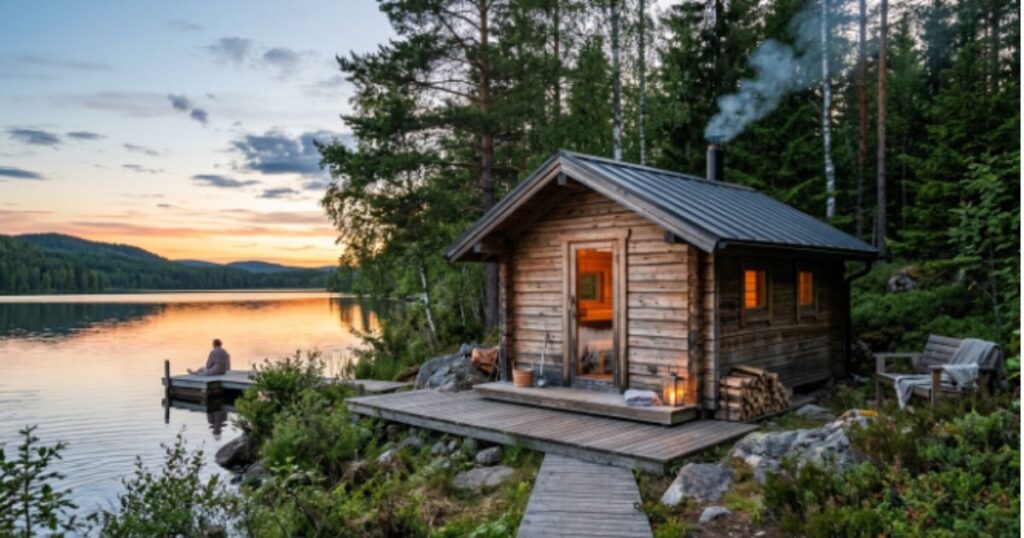
The cost of outdoor saunas varies too much for one number to be meaningful. A basic budget outdoor sauna can be relatively simple, while a premium outdoor sauna with custom finishes, upgraded glazing, advanced controls, and professional site work can cost several times more. The purchase price is only one part of the equation. Delivery, foundation work, electrical service, assembly, permits, accessories, and landscaping can all change the final bill.
A practical way to think about outdoor sauna costs is to divide the project into four layers: the sauna itself, the site, utilities, and finishing work. This prevents a common budgeting mistake. Someone sees a kit price online and assumes that’s the total project price. Then the electrician, foundation contractor, delivery company, and landscaper arrive with separate invoices.
| Cost factor | What affects the price | Why it matters |
| Sauna structure | Size, design, wood, windows | Determines the basic purchase price |
| Heater | Electric, wood-fired, infrared | Changes equipment and installation needs |
| Foundation | Slab, pavers, deck, site work | Supports the structure |
| Electrical | Circuit, wiring distance, panel capacity | Can add significant installation expense |
| Delivery | Distance and access | Large structures may need special delivery |
| Assembly | DIY or professional | Labor changes total project cost |
| Permits | Local rules and project scope | Fees vary by location |
| Accessories | Lighting, controls, benches, speakers | Adds comfort and convenience |
| Landscaping | Paths, privacy, drainage, decking | Turns the sauna into a complete retreat |
| Maintenance | Wood care, heater service, repairs | Adds to long-term ownership cost |
Outdoor Sauna Cost by Type
A barrel sauna often offers a simpler structure than a fully custom cabin. A cabin-style sauna can cost more when it includes additional insulation, larger windows, complex roofing, or a changing area. An infrared sauna may have different equipment and electrical needs than a traditional sauna. A custom build can move far beyond the standard price range of prefabricated models because every part becomes a design decision.
The key is to compare complete project costs. Two products with similar sticker prices can have very different installation costs. One might arrive mostly assembled and require minimal site work. Another may need a foundation, extensive electrical work, professional assembly, and additional weather protection.
Installation and Operating Costs
Your installation cost depends heavily on the site. A level backyard with nearby electrical service is easier than a sloped lot with poor drainage and a distant electrical panel. A wood-fired model may avoid some electrical work while creating additional chimney and fire-safety requirements.
The operating cost of an electric sauna depends on heater power, electricity rates, session length, insulation, outdoor temperature, and usage frequency. A well-insulated sauna generally needs less energy to maintain heat than a poorly sealed structure. A wood-fired sauna replaces electricity with firewood, but wood still costs money and requires storage and handling.
Hidden Outdoor Sauna Costs
The least glamorous expenses often surprise buyers. Delivery access may be difficult. A crane or special handling might become necessary for a large structure. The electrical panel may lack capacity. A drainage problem may require excavation. A local permit may require drawings. A simple-looking installation can become a construction project.
That’s why sauna value should be judged over years rather than at checkout. If you use the sauna several times every week, spending more on comfortable benches, reliable controls, insulation, and durable construction may make more sense than choosing the cheapest possible unit.
How to Use and Maintain an Outdoor Sauna
Using an outdoor sauna well is more about consistency than extremes. You don’t need to make every session a test of endurance. Start comfortably and learn how your body responds. Allow the room to heat fully, sit for a manageable period, leave if you feel unwell, cool down gradually, and drink enough fluids. A sauna works best as a repeatable wellness routine, not a competition.
Heat also creates fluid loss through sweating. That’s why hydration matters before and after a session. The CDC advises people exposed to heat to drink enough fluids and watch for symptoms such as dizziness, weakness, nausea, headache, and heavy sweating. A sauna isn’t the same as outdoor heat exposure, but the underlying lesson remains useful: don’t ignore signs that your body is struggling with heat.
How Long Should You Stay in an Outdoor Sauna?
There isn’t one perfect session length for everyone. Beginners should use shorter sessions and gradually learn their tolerance. The right duration depends on temperature, humidity, personal experience, hydration, and individual health factors.
More isn’t automatically better. Extreme heat and prolonged exposure increase the physical stress on the body. If you feel dizzy, weak, nauseated, confused, or faint, leave the sauna and cool down. Those aren’t signs that you’re getting a better workout.
Sauna Cleaning
Regular sauna cleaning protects the wood and keeps the room pleasant. Wipe benches and surfaces according to the manufacturer’s care instructions. Keep the floor clean and dry. Don’t saturate unfinished wood with excessive water. If the sauna has a removable floor system, clean underneath it periodically.
Mold prevention and mildew prevention depend heavily on moisture management. Allow the sauna to dry after use. Keep vents clear. Address leaks quickly. Persistent dampness can damage wood even when the sauna itself looks sturdy from the outside.
Wood Maintenance
Exterior wood faces rain, sunlight, snow, and temperature swings. Wood maintenance may involve cleaning and an approved exterior stain or other protective finish. The correct treatment depends on the wood and manufacturer. Interior sauna wood is different because high temperatures can affect finishes and odors.
A cedar sauna may naturally resist certain outdoor threats, but that doesn’t mean it can ignore maintenance. Likewise, a thermowood sauna still needs sensible roof, drainage, and moisture protection.
Winter Preparation
Winter preparation matters in much of the USA. Remove heavy snow from areas where accumulation exceeds the structure’s design limits. Keep drainage paths clear. Inspect the roof, door seals, vents, and exterior surfaces. If temperatures regularly fall below freezing, follow the manufacturer’s recommendations for any water-related components.
A properly planned sauna can support year-round outdoor use, but the climate should influence your material and heater decisions from day one.
Outdoor Sauna Safety Tips
Safety starts with respecting heat. A sauna is a hot environment that changes heart rate, circulation, sweating, and fluid balance. Healthy adults can often tolerate sauna bathing when they use sensible practices, but individual circumstances matter. The American Heart Association notes that people with controlled high blood pressure may be able to tolerate saunas, while recommending medical guidance when concerns exist. It also advises against combining alcohol with sauna use.
Alcohol deserves special attention. It can contribute to dehydration and affect heat tolerance. The CDC also notes that alcohol can increase dehydration and worsen the risk of heat-related illness in hot environments.In practical terms, a sauna isn’t the place to test how well alcohol and heat mix. They don’t.
Sauna Temperature and Session Safety
Traditional sauna temperatures can become very high. The ideal sauna temperature depends on the sauna type, user, and manufacturer’s recommendations. Don’t assume that a higher maximum temperature equals a better experience.
The body gives useful warnings. Dizziness, weakness, nausea, unusual confusion, severe headache, or feeling faint are reasons to leave. Cooling down and rehydrating are more important than finishing a timer.
Electric Sauna Safety
An electric sauna needs correctly installed electrical equipment. Never modify a heater’s wiring without following its installation instructions. Use equipment certified for the intended application and have required work performed by a qualified professional.
UL Solutions explains that product certifications and evaluation reports can help code authorities determine whether equipment meets applicable requirements. Manufacturer instructions and locally adopted codes still govern the actual installation
Wood-Burning Sauna Safety
A wood-burning sauna introduces open flame, combustion gases, hot surfaces, and a chimney. The wood-burning stove must have the correct clearances and supporting construction. The chimney needs to be installed according to the stove manufacturer’s instructions and applicable requirements.
Don’t improvise a stove installation because a setup looks similar online. Fuel-fired equipment needs proper installation, inspection, and maintenance. UL Solutions emphasizes that correct installation and compliance with manufacturer instructions are essential for safe fuel-fired equipment.
Ventilation and Air Quality
A good ventilation system supplies fresh air and removes stale air. Keep the intake vent and exhaust vent unobstructed. Never cover vents because the room feels too drafty without understanding how the ventilation system was designed.
Combustion-based saunas require even more attention because burning wood produces combustion gases. Follow the heater and chimney manufacturer’s ventilation instructions precisely.
Children and Sauna Use
Children require extra caution because they may not recognize overheating as quickly as an adult. Keep sessions conservative and supervise young users closely. The sauna should never become a place where children play around a hot heater, stones, or stove.
Hydration and Medical Considerations
Hydration supports normal temperature regulation. If you take medications that affect sweating, blood pressure, hydration, or heat tolerance, ask a healthcare professional whether sauna use is appropriate. The CDC notes that some medications can alter sweating, thermoregulation, or dehydration risk.
Outdoor Sauna vs. Indoor Sauna: Which Is Better?
The choice between an outdoor home sauna and an indoor model comes down to space, lifestyle, construction, and climate. An indoor sauna can be convenient because you don’t walk outside in rain or snow. It may also share existing utilities. An outdoor model, however, creates a dedicated room and frees the house from the heat and humidity of sauna use.
An outdoor sauna room can also become part of a broader backyard project. A deck, outdoor shower, seating area, landscaping, and cold plunge can turn a simple structure into a private outdoor sauna retreat. The downside is exposure to weather. Roofs, siding, doors, foundations, and drainage all need attention. The better choice isn’t universal. It depends on what your property allows and how you want to use the sauna.
| Feature | Outdoor sauna | Indoor sauna |
| Space | Uses outdoor area | Uses interior floor space |
| Privacy | Often very high | Depends on room location |
| Weather exposure | High | Very low |
| Installation | Often more involved | Can be simpler in suitable spaces |
| Drainage | Must be planned | Usually easier to manage |
| Maintenance | More exterior maintenance | Less exterior exposure |
| Design | Many standalone options | Must fit the building |
| Access | Requires going outside | Very convenient |
| Backyard integration | Excellent | Limited |
| Expansion potential | Can become a wellness zone | Usually limited by indoor space |
Outdoor Sauna vs. Indoor Sauna for Small Homes
A small outdoor sauna can solve a space problem when a home has no suitable spare room. A compact two-person model may fit beside a garage, deck, pool, or garden without consuming valuable indoor floor area. Yet the backyard still needs enough space for safe placement, access, maintenance, and required clearances.
For an apartment, rental property, or small urban lot, a portable sauna might be worth investigating. For a homeowner with a generous yard, a permanent sauna for backyard use often provides a more satisfying long-term experience.
Outdoor Sauna vs. Indoor Sauna for Cold Climates
Cold weather doesn’t automatically rule out outdoor saunas. In fact, stepping from a hot sauna into crisp winter air is part of the appeal for many enthusiasts. The structure simply needs to be designed for its environment.
Strong sauna insulation, good weather protection, proper roofing, reliable doors, and suitable heating capacity become especially important in cold climates. Snow load and roof drainage also deserve attention. A cheap unit with weak construction can perform very differently from a properly engineered cold-weather sauna.
Which Has Better Long-Term Value?
An indoor sauna may offer greater convenience, while an outdoor model may provide greater separation and design flexibility. Neither automatically has better financial value. The better investment is the one you will actually use.
Consider your routine. If you want a quick session every evening, walking across a cold backyard might reduce usage. If you love outdoor living and want a dedicated wellness space, an outdoor unit may become the favorite feature of the property.
Outdoor Sauna Buying Checklist
Before ordering, measure the proposed site and compare those dimensions with the manufacturer’s exterior and interior specifications. Confirm the sauna capacity, heater size, door position, bench layout, roof design, foundation requirements, and electrical needs. Then check delivery access. A structure that fits the yard might not fit through a narrow gate.
Next, calculate the complete project budget. Include the sauna, sauna heater, foundation, electrical work, permits, delivery, assembly, accessories, and expected maintenance cost. Review the warranty and read the installation manual before paying a deposit. This simple step can uncover requirements that aren’t obvious in a product listing.
| Before buying | What to verify |
| Size | Exterior and interior sauna dimensions |
| Capacity | Realistic seating capacity |
| Heater | Output and compatibility |
| Electrical | Voltage, amperage, and circuit |
| Wood | Species and exterior treatment |
| Insulation | Wall, roof, and door construction |
| Foundation | Manufacturer’s foundation requirements |
| Ventilation | Intake and exhaust design |
| Roof | Rain and snow protection |
| Delivery | Access to the installation site |
| Assembly | DIY or professional installation |
| Local rules | Permits, zoning, and HOA requirements |
| Warranty | Structure, heater, controls, and exclusions |
| Maintenance | Cleaning, wood care, and weather protection |
Outdoor Sauna Case Study: A Small Backyard
Imagine a homeowner with a modest suburban yard and a strong interest in wellness. The original plan is a large six-person sauna. After measuring the space, the homeowner realizes that the structure would leave little room for walking and maintenance. A two-person outdoor sauna becomes the smarter choice.
The smaller model costs less to heat and leaves room for a deck, outdoor shower, and seating. The homeowner chooses an electric heater, a solid foundation, good insulation, and weather-resistant exterior wood. The result isn’t the biggest sauna available. It’s the one that fits the property and gets used regularly. That’s the real lesson: the best outdoor sauna is the one that matches your space and lifestyle.
Outdoor Sauna Case Study: A Cold-Climate Backyard
Consider another homeowner in a region with freezing winters and heavy snowfall. A lightweight budget model may look attractive at first, but the buyer prioritizes insulation, roof strength, drainage, durable exterior materials, and heater capacity. A cabin-style sauna provides more room for insulation and bench design than a very compact model.
The initial purchase price is higher, but the homeowner avoids several compromises. The structure handles weather better, the interior stays more comfortable, and maintenance is easier to plan. Here, spending more on durability, weather resistance, and build quality makes more sense than paying for decorative features.
Final Thoughts
The best outdoor saunas combine good design with practical construction. A beautiful rustic outdoor sauna can create a peaceful backyard escape. A modern outdoor sauna can complement contemporary architecture. A luxury outdoor sauna can become the centerpiece of a full wellness area. Yet appearances are only the beginning. The heater, insulation, ventilation, foundation, roof, drainage, wood, and electrical system determine how well the sauna performs after the novelty fades.
Whether you choose an outdoor barrel sauna, outdoor sauna cabin, outdoor infrared sauna, wood-fired outdoor sauna, or electric outdoor sauna, start with your actual needs. Think about who will use it, how often you’ll use it, what your climate demands, and how much space you have. Then build the budget around the complete project rather than the advertised sauna price. With thoughtful planning, your backyard sauna can become far more than a hot room. It can be a comfortable backyard wellness space, a place for relaxation, a complement to muscle recovery, and a quiet part of your everyday wellness routine.
The best sauna isn’t necessarily the hottest, largest, or most expensive. It’s the one you can use safely, maintain easily, and enjoy for years.
FAQ’s About Outdoor Saunas
Is it worth getting an outdoor sauna?
Yes, an outdoor sauna can be worth it if you’ll use it regularly. It offers convenient relaxation, heat therapy, and a private wellness space, but you should factor in installation, electricity, maintenance, and weather protection costs.
What is the best sauna for outdoor use?
A traditional Finnish sauna is a strong choice if you want high heat and the option to add water to sauna stones. An infrared model may suit you better if you prefer lower temperatures and simpler operation.
Do you need a permit for a backyard sauna?
It depends on your city, county, state, sauna size, foundation, utilities, and local building codes. Check with your local building department and HOA before installation because requirements vary across the U.S.
Does Costco sell an outdoor sauna?
Yes. Costco currently lists several outdoor saunas, including Almost Heaven outdoor barrel models and other infrared and hybrid options. Availability and pricing can vary.
What is the 200 rule for saunas?
The 200 rule is a rough guideline that adds sauna temperature in °F to relative humidity percentage, aiming for about 200 total. For example, 170°F plus 30% humidity equals 200.
People Read Also: Drunk Driving Accident Lawyer: How to Protect Your Rights & Recover Compensation

My name is M.Adil, I am specialize in creating thoughtful digital content that informs, inspires, and engages readers worldwide. Every piece is written with care and originality.