

Key Takeaways
- The best binding choice starts with how readers will use the finished piece.
- Page count, paper thickness, cover design, budget, and expected handling all influence the right format.
- Perfect binding gives books, reports, catalogs, and magazines a clean, shelf-ready spine.
- Saddle stitching suits lighter booklets, while spiral and Wire-O formats support pages that need to stay open.
- Careful file preparation helps prevent issues with margins, spine text, page order, and image quality.
Binding is not simply a production detail. It shapes how a book feels in the reader’s hands, how easily it opens, how it looks on a shelf, and how well it holds up over time. For a polished softcover format with a square spine, Printivity’s perfect-bound book service is one option to consider for projects such as reports, catalogs, manuals, and novels.
A strong cover cannot fully compensate for a binding style that is wrong for the job. A classroom workbook needs a different construction than a short event program, just as a retail-ready novel has different needs than a training guide used every day at a desk.
Why Binding Choice Matters
The right format balances appearance, function, cost, and lifespan. A sales catalog may need a professional spine and durable cover, while a simple newsletter may only need a lightweight format that is easy to distribute. Think about what happens after printing: Will readers write in it, carry it, display it, file it, or read it from beginning to end?
Binding also affects page movement. Some formats are designed for comfortable sequential reading, while others are better when users must keep one spread open while taking notes, following instructions, or comparing information.
The history and mechanics of bookbinding methods show why construction choices matter: the way pages, covers, adhesive, stitching, or wire are joined changes both the book’s behavior and its finished appearance.
Common Book Binding Styles At A Glance
- Perfect binding: Pages are secured at the spine with adhesive and covered by a wraparound soft cover. It suits books, catalogs, magazines, and substantial reports.
- Paperback binding: Often used broadly to describe flexible, softcover books. It is a familiar choice for novels, guides, and self-published titles.
- Saddle stitching: Folded sheets are fastened through the fold. It works well for shorter booklets, programs, newsletters, and event materials.
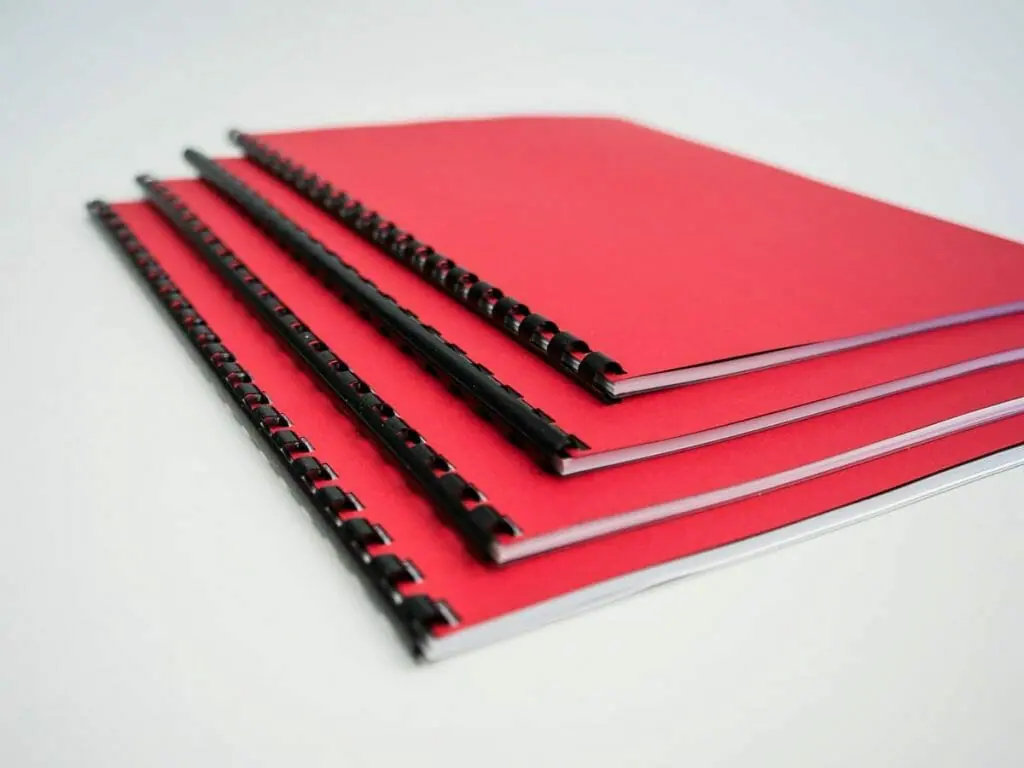
- Spiral binding: A coil passes through punched holes, allowing pages to turn freely and lie flat. It is useful for recipes, workbooks, and instructional guides.
- Wire-O binding: A twin-loop wire holds punched pages together. It offers a tidy, professional look for manuals, reference materials, and presentations.
- Hardcover binding: A rigid case protects the pages and creates a more formal, lasting presentation for keepsakes, premium books, and frequently retained titles.
Match The Binding To The Page Count
Short documents often do not need a square spine. Saddle stitching can be a practical option when a booklet is light and compact. As a project becomes thicker, perfect binding, PUR-style adhesive binding, or hardcover construction may be more appropriate.
Photorealistic macro close-up of a bookbinding edge showing neatly aligned paper layers, adhesive at the spine, and the textured surface of a softcover, with shallow depth of field and a softly blurred print-production background.
Do not use page count alone to estimate spine width. Paper thickness matters too. A book printed on heavier stock can have a wider spine than another book with the same number of pages on lighter paper. Confirm the interior paper before finalizing a cover template or adding spine text.
Consider How Readers Will Use The Piece
- Reading cover to cover: Perfect-bound and paperback formats provide a familiar book experience.
- Frequent note-taking: Spiral or Wire-O binding makes it easier to keep pages open while writing.
- Quick reference: Manuals and desk guides benefit from a format that stays stable when opened to a specific page.
- Retail or shelf display: A readable spine, clear title placement, and a durable cover deserve early attention.
- Event handouts: A lightweight saddle-stitched booklet can be easy to carry and distribute.
Compare Durability, Covers, And Spine Planning
Softcovers are flexible and portable, while hardcovers add rigidity and protection. Adhesive-bound books are intended for ordinary page turning, whereas coils and wire are especially helpful where repeated opening and closing is expected. A training manual becomes frustrating when users need both hands to keep it open, so usability should lead the decision.
Plan the cover around the chosen binding. Keep essential text and logos away from trim edges, folds, and the spine area. A narrow spine may not provide enough space for legible type, so forcing a title onto it can make the design harder to read rather than more professional.
Prepare The Interior File Before Production
- Confirm the final trim size before setting up the page layout.
- Use consistent margins and allow sufficient room near the binding edge, often called the gutter.
- Review page order, blank pages, page numbers, captions, and section breaks.
- Use high-resolution images at their intended printed size, rather than enlarging small files.
- Check fonts, color settings, and full-bleed artwork according to the printer’s file requirements.
- Inspect a proof at full size, especially when the project includes small type, detailed images, or spine text.
Paper, Color, Finish, And Budget
Paper affects more than visual style. Its weight and finish influence thickness, flexibility, opacity, and the final spine measurement. Coated paper is often selected for image-heavy layouts, while uncoated paper can be comfortable for text-focused documents and writing. Cover coatings can also help protect frequently handled pieces from surface wear.
Color should be reviewed carefully before printing, since screen previews and printed output do not always look identical. A proof is especially useful when color accuracy, full-bleed photography, or tightly positioned design elements are important. Teams tracking broader manufacturing developments can also see how production considerations continue to shape publishing decisions.
The budget should include more than the per-copy price. Account for proofing, revisions, shipping, and possible file corrections. A simple format may be the best value for a short-lived handout, while a document meant for ongoing use may justify a sturdier binding and cover.
A Simple Decision Guide
- Choose saddle stitching for short, lightweight booklets.
- Choose perfect binding when a clean, book-like spine is important.
- Choose spiral or Wire-O when pages must lie flat during use.
- Choose hardcover when durability, presentation, or long-term retention is the priority.
- Finalize paper, page count, trim size, and spine dimensions before approving cover artwork.
Questions Readers Often Ask
What Binding Works Best For A Professional Report?
Perfect binding can work well for reports that need a polished cover and spine. Wire-O may be better for reports that readers need to keep open during meetings or presentations.
Is Perfect Binding A Good Choice For A Short Book?
It can be, provided the finished document has enough thickness for the binding and intended appearance. Very short pieces are often better suited to saddle stitching.
Which Binding Is Best For A Workbook?
Spiral and Wire-O are strong options when users need to write, reference instructions, and keep the workbook open. A softcover book can work when reading matters more than desk use.
Conclusion
The right binding format begins with the reader’s needs. Review the page count, paper, cover, spine space, handling requirements, file setup, and budget before production begins. That preparation makes it easier to choose a format that looks purposeful, works comfortably, and supports the project long after the first copy is opened.
