

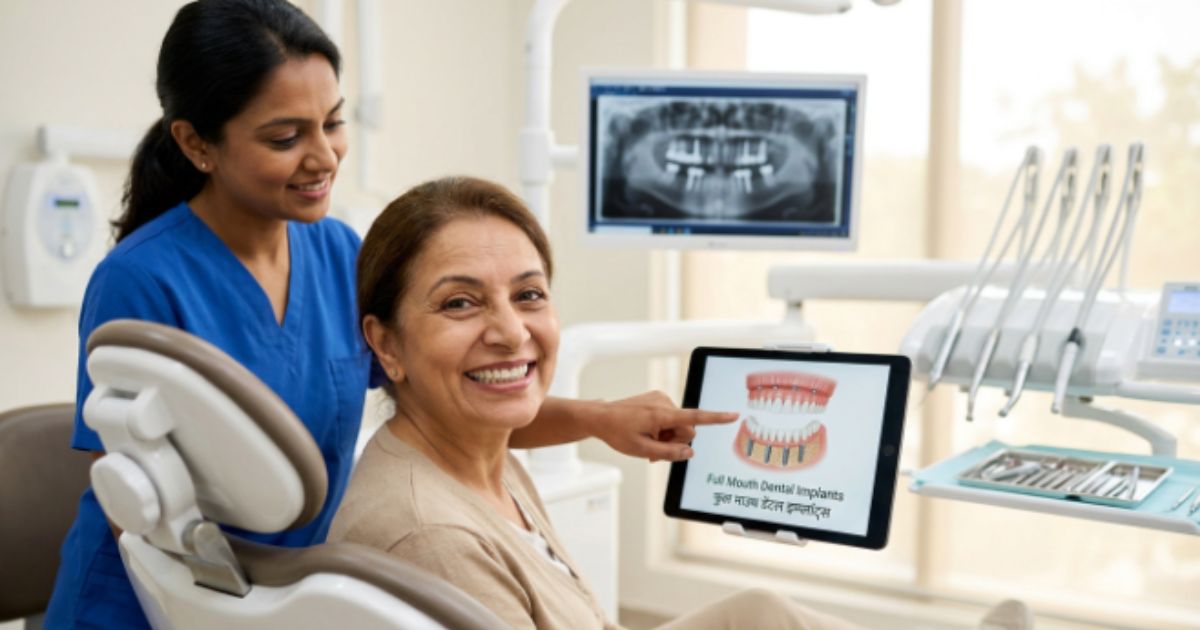
Full mouth dental implants offer one of the most advanced and reliable solutions for replacing an entire upper or lower set of missing or damaged teeth. Unlike removable dentures, this treatment provides permanent, stable teeth that look, feel, and function like natural ones. Whether you’ve experienced tooth loss from injury, decay, or gum disease, modern implant techniques can restore your smile and improve your quality of life.
Options like All-on-4 dental implants, implant-supported dentures, and same-day dental implants make treatment more flexible than ever. This guide explains everything you need to know, from the procedure and costs to recovery, helping you choose the best solution for a healthier, more confident smile.
What Are Full Mouth Dental Implants?
Full mouth dental implants are a permanent solution for people who have lost most or all of their teeth or have several damaged teeth that cannot be saved. Instead of replacing every tooth with a separate implant, dentists strategically place a small number of titanium dental implants into the upper jaw, lower jaw, or both. These implants act like artificial tooth roots and support a complete set of artificial teeth through a custom-made implant-supported prosthesis. This treatment is often called complete arch restoration because it replaces an entire row of teeth with a fixed restoration that stays securely in place.
Unlike traditional dentures, which rest on the gums and may slip while eating or talking, full mouth dental implants become part of your jaw through a natural process called osseointegration. During this process, the implants fuse with the surrounding bone to create remarkable stability. The result is a durable restoration that improves chewing ability, supports facial bone preservation, and delivers a confident natural smile. Many patients choose implants because they offer a long-lasting solution for tooth loss treatment while preserving jawbone health and improving everyday comfort.
How Full Mouth Dental Implants Work
The success of full mouth dental implants begins with a detailed consultation and examination. Your dentist or oral surgeon reviews your dental history, performs a complete oral health evaluation, and studies your medical history review to make sure you’re a suitable candidate. Modern clinics also use a CBCT scan and 3D dental imaging to examine bone quality, locate nerves, and prepare accurate treatment planning before surgery begins.
Once planning is complete, the dentist performs implant placement surgery using carefully positioned titanium dental implants. Depending on your treatment, the implants may support a fixed dental prosthesis, an implant-supported bridge, or implant-supported dentures. During healing, many patients receive temporary teeth so they can continue speaking and smiling comfortably while the implants bond with the jawbone. After complete implant healing, the dentist attaches the final restoration using strong implant abutments, creating stable teeth that look and feel remarkably natural.
Full Mouth Dental Implants vs Traditional Dentures
Many people compare dental implants vs dentures before choosing a treatment. While traditional dentures remain a practical option for some patients, they can become loose over time because they simply rest on the gums. This movement may reduce comfort and affect eating or speaking. In contrast, full mouth dental implants anchor directly into the jawbone, creating comfortable replacement teeth that remain secure throughout daily activities.
The comparison between permanent implants vs traditional dentures becomes even clearer over time. Implants help maintain bone preservation, improve facial support, and reduce future bone loss. Patients also notice improved chewing, improved speech, and greater confidence because the teeth stay firmly in place. Although dentures often cost less initially, implants usually provide greater value because they last much longer with proper care.
Full Arch Restoration Explained
A complete arch restoration replaces every tooth in the upper or lower jaw using several carefully positioned implants instead of replacing each tooth individually. This method distributes biting pressure evenly across the implants, allowing them to support an entire arch of replacement teeth. Modern systems include All-on-4 dental implants, All-on-6 dental implants, and customized fixed restorations that match each patient’s bone structure and oral health needs.
Today’s dentists often combine digital smile design, computer-guided implant placement, and guided implant surgery to improve precision and comfort. These technologies allow the dental team to plan implant positions before surgery begins, reducing uncertainty and improving accuracy. The result is a predictable procedure with excellent long-term success for many patients seeking permanent smile restoration.
| Feature | Full Mouth Dental Implants | Traditional Dentures |
| Stability | Permanent and fixed | Removable |
| Appearance | Very natural | Natural but may shift |
| Bone Support | Preserves jawbone | Does not prevent bone loss |
| Chewing Power | Excellent | Moderate |
| Lifespan | Often decades with care | Usually replaced every few years |
| Daily Care | Similar to natural teeth | Requires removal for cleaning |
Why More Americans Choose Permanent Tooth Replacement
Across the United States, more people are selecting full mouth dental implants because they want a reliable alternative to removable teeth. Modern implant systems provide a secure fit that allows patients to eat steak, apples, nuts, and many other foods that often challenge denture wearers. This stability also creates a stronger sense of confidence during conversations, social events, and professional meetings.
Another reason for their growing popularity is their outstanding long-term value. Although the average cost of full mouth dental implants is higher than removable options, many patients consider the investment worthwhile because implants provide a durable tooth replacement, protect jawbone health, and contribute to a better quality of life. When combined with excellent oral hygiene, regular dental implant maintenance, and routine dental visits, these restorations can remain healthy for many years.
Types of Full Mouth Dental Implants
Not every patient has the same dental needs, which is why dentists offer several types of full mouth dental implants. Your ideal treatment depends on factors such as bone quality, the number of missing teeth, overall health, and personal goals. Some patients qualify for same-day dental implants, while others may benefit from additional procedures such as a bone graft before receiving permanent teeth. A personalized treatment plan ensures the safest and most successful outcome.
Modern implant dentistry continues to evolve with new materials and advanced technology. Today, patients can choose between fixed implant dentures, implant-supported dentures, and custom restorations made from zirconia teeth, acrylic teeth, or porcelain teeth. Each option offers unique advantages in strength, appearance, comfort, and long-term durability. Your dentist will recommend the best approach after evaluating your smile and discussing your expectations.
All-on-4 Dental Implants
All-on-4 dental implants use four carefully placed implants to support an entire upper or lower arch of replacement teeth. The rear implants are positioned at special angles to maximize existing bone, making this treatment suitable for many patients who have experienced moderate bone loss. In some situations, patients can even receive immediate loading with a temporary fixed bridge on the same day as surgery.
One of the biggest advantages in the comparison of All-on-4 vs All-on-6 is that the All-on-4 technique often requires fewer implants while still delivering excellent stability. It also shortens treatment time for many patients and may reduce overall costs without sacrificing function or appearance.
All-on-6 Dental Implants
All-on-6 dental implants follow the same concept as All-on-4 but use six implants instead of four. The extra implants distribute chewing forces more evenly across the jaw, making this option especially helpful for patients with strong bone density who want additional support for their permanent teeth.
Dentists often recommend All-on-6 for younger patients or those with higher biting forces. Although this treatment may cost slightly more, it provides exceptional long-term stability and may improve the lifespan of the final restoration.
Implant-Supported Dentures
Implant-supported dentures combine the affordability of dentures with the stability of implants. Instead of resting entirely on the gums, these dentures attach securely to implants placed in the jawbone. This design greatly reduces movement while eating or speaking and improves overall comfort compared to removable dentures.
Patients who compare implant-supported dentures vs conventional dentures often appreciate the stronger bite, improved confidence, and easier daily function. Depending on the treatment design, these dentures may be removable by the patient or permanently fixed by the dentist.
Fixed Full-Arch Implant Bridges
A fixed implant-supported bridge permanently attaches to several implants and remains in place at all times. Unlike removable options, patients cannot remove this bridge themselves. Only a dental professional removes it during maintenance visits when necessary.
Many patients choose this option because it closely resembles natural teeth in appearance and performance. It provides excellent stability for eating and speaking while offering a highly attractive smile that feels secure throughout the day.
Same-Day Full Mouth Dental Implants
Some patients qualify for same-day dental implants, also known as immediate load implants. This treatment allows the dentist to place implants and attach temporary teeth during the same appointment. Instead of waiting several months without teeth, patients leave the office with a functional temporary smile while the implants heal beneath the gums.
Not everyone qualifies for this approach. Success depends on strong bone quality, careful planning, and a precise surgical protocol. Your dentist will determine whether immediate treatment is appropriate after reviewing your scans and overall health.
Zirconia vs Acrylic Implant Teeth
The material used for replacement teeth plays an important role in appearance, strength, and durability. Zirconia teeth offer outstanding strength, stain resistance, and a highly natural appearance. Many patients prefer zirconia because it closely resembles natural enamel and can last for many years with proper care.
Acrylic teeth remain a popular option because they cost less and are easier to adjust if changes become necessary. Some restorations also combine porcelain teeth with advanced frameworks for added beauty and durability. Your dentist will recommend the most suitable material based on your bite, lifestyle, and budget.
| Implant Type | Best For | Main Advantage |
| All-on-4 dental implants | Moderate bone loss | Fewer implants with strong support |
| All-on-6 dental implants | Strong jawbone | Greater stability and force distribution |
| Implant-supported dentures | Patients wanting removable stability | Better retention than traditional dentures |
| Implant-supported bridge | Permanent fixed teeth | Feels closest to natural teeth |
| Same-day dental implants | Qualified healthy patients | Teeth placed on the day of surgery |
Who Is a Good Candidate for Full Mouth Dental Implants?
Choosing full mouth dental implants is a big decision. The good news is that many adults qualify for this treatment. Whether you have several damaged teeth, advanced gum disease, or complete tooth loss, modern implant dentistry offers solutions for many situations. However, every smile is different. Your dentist will carefully examine your mouth, review your health, and create a personalized treatment plan before recommending surgery. A complete evaluation helps improve safety and increases the chance of long-term success.
The best results come from careful planning rather than rushing into treatment. Your dental team will perform a consultation and examination, study your medical history review, and complete a detailed oral health evaluation. Modern clinics also use a CBCT scan and 3D dental imaging to check your bone density, identify important structures inside the jaw, and build accurate treatment planning before surgery begins. This step reduces surprises during the procedure and helps create a predictable outcome.
Signs You May Need Full Mouth Dental Implants
Many people wait too long before replacing damaged teeth. Over time, missing teeth can affect your bite, speech, appearance, and overall health. If you have several broken, loose, or infected teeth, your dentist may recommend full mouth dental implants instead of repairing each tooth individually. Patients who wear uncomfortable traditional dentures or struggle with repeated dental problems also benefit from this long-term solution.
You may also need implants if your remaining teeth cannot support a dental bridge or if previous tooth loss treatment has failed. Many people choose implants because they want stable teeth, a stronger bite, and a permanent solution that restores confidence. Early treatment also protects jawbone health and reduces future complications caused by prolonged tooth loss.
Bone Density and Gum Health Requirements
Healthy gums and a strong jawbone form the foundation of successful implant treatment. Before surgery, your dentist checks for healthy gums, enough sufficient jawbone, and signs of active infection. Since implants depend on the surrounding bone for support, poor bone quality may require additional treatment before implants can be safely placed.
A healthy mouth also means controlling gum disease before surgery begins. If your gums are swollen or infected, your dentist will recommend treatment first. Once the infection clears and the tissues heal, implant surgery becomes much safer. Maintaining excellent oral hygiene before and after treatment also plays a major role in long-term implant success.
Health Conditions That May Affect Treatment
Most healthy adults qualify for implants. Even people with certain medical conditions may still receive treatment if those conditions remain well controlled. During your evaluation, the dentist reviews any chronic health conditions, medications, allergies, and previous surgeries to determine whether healing could be affected.
Patients with diabetes and dental implants often ask whether they are eligible. The answer is usually yes when blood sugar stays under control. Conditions such as osteoporosis, autoimmune disorders, or heart disease do not always prevent treatment either. Your dentist and physician may simply work together to ensure the safest possible care throughout the recovery process.
Can Smokers and Seniors Get Dental Implants?
Age alone rarely prevents someone from receiving implants. Many people in their sixties, seventies, and even eighties enjoy excellent results with full mouth dental implants. Overall health matters much more than birth date. If you have healthy bone and your medical conditions remain stable, you may still be an excellent good candidate for dental implants.
The discussion becomes different when it comes to smokers and implants. Smoking slows blood flow and increases the chance of implant failure, delayed healing, and infection. Dentists often encourage patients to stop smoking several weeks before surgery and continue avoiding tobacco during recovery. Doing so greatly improves long-term implant success.
When Bone Grafting May Be Necessary
Some patients lose bone after years of missing teeth. Fortunately, this does not always eliminate implant treatment. A bone graft rebuilds weak areas of the jaw and creates a stronger foundation for implants. Today, bone grafting has become a routine procedure that allows many patients to qualify for implants who previously could not.
The healing period after a bone graft depends on the amount of new bone needed. In some cases, implants can be placed during the same visit. Other patients may need several months of healing before implant placement begins. Your dentist will explain the recommended timeline based on your individual condition.
| Candidate Factor | Why It Matters |
| Healthy gums | Reduce infection risk and improve healing |
| Strong jawbone | Supports implants securely |
| Good overall health | Promotes faster recovery |
| Controlled medical conditions | Improves treatment success |
| Non-smoker or willing to quit | Lowers implant complications |
| Commitment to oral care | Helps implants last for decades |
Full Mouth Dental Implant Procedure: Step-by-Step Process
Understanding the full mouth implant procedure helps reduce anxiety before treatment. Although every patient receives a customized plan, the overall process follows similar steps from consultation to final smile restoration. Modern dentistry combines digital technology with precise surgical techniques to make treatment safer, faster, and more comfortable than ever before. Knowing what happens at each stage also helps you prepare both physically and financially.
Most patients complete treatment over several months because implants need time to bond with the jawbone. However, advances such as same-day dental implants and immediate loading allow many qualified patients to receive temporary fixed teeth on the day of surgery. Your dentist will recommend the best schedule after reviewing your oral health and treatment goals.
Initial Consultation and Digital Smile Assessment
Every successful implant journey begins with a detailed dental consultation. During this appointment, your dentist examines your mouth, discusses your goals, and reviews your complete health history. This visit also includes a consultation and examination to identify damaged teeth, evaluate gum health, and determine whether implants offer the best long-term solution.
Many implant centers now use digital smile design to help patients visualize their future smile before treatment starts. This technology combines digital photographs, facial measurements, and computer software to create a personalized restoration that matches your facial features and bite.
X-Rays, CBCT Scans, and Treatment Planning
After the initial consultation, your dentist gathers detailed images of your mouth using a CBCT scan and 3D dental imaging. Unlike standard dental X-rays, these scans create three-dimensional views of your jawbone, nerves, and sinus areas. The information helps the dental team choose the safest implant positions while avoiding important anatomical structures.
Using these digital images, your dentist completes precise treatment planning before surgery. Advanced software also supports computer-guided implant placement, allowing implants to be positioned with exceptional accuracy. Better planning usually means shorter procedures, faster healing, and improved long-term results.
Tooth Extraction and Jaw Preparation
If damaged or infected teeth remain, your dentist performs a tooth extraction before placing implants. Removing unhealthy teeth creates space for the new restoration and helps eliminate infection that could interfere with healing. Some patients also need treatment for gum disease before surgery begins.
Patients with limited bone may require a bone graft to strengthen the jaw before implants are placed. While this adds time to treatment, it greatly improves stability and long-term success. Your dentist carefully explains whether this extra step is necessary during your consultation.
Dental Implant Placement Surgery
The next stage is implant placement surgery, which forms the foundation of the entire restoration. During this procedure, the oral surgeon carefully inserts titanium dental implants into the jawbone according to the digital treatment plan. Many specialists now perform guided implant surgery, which increases precision and minimizes unnecessary tissue trauma.
Once the implants are in place, the dentist may attach healing components or temporary restorations depending on your treatment plan. Strict surgical protocol helps reduce infection risk, minimize bleeding after implant surgery, and lower the chances of nerve damage or sinus complications.
Temporary Teeth and Healing Period
Many patients receive temporary teeth immediately after surgery, especially when using same-day dental implants or immediate load implants. These temporary restorations allow you to smile confidently while your implants heal beneath the gums. Although they look attractive, they require a softer diet during the healing period to protect the implants.
The next stage involves osseointegration, where the implants naturally fuse with the surrounding bone. This biological process usually takes several months and forms the strong foundation needed for permanent teeth. Following your dentist’s instructions during this healing timeline greatly improves long-term success.
Final Permanent Teeth Placement
Once healing is complete, your dentist removes the temporary restoration and places your custom implant-supported prosthesis. The new teeth attach securely to the implants through durable implant abutments, creating a stable and natural-looking smile. Every restoration is carefully adjusted to ensure proper bite alignment and long-term comfort.
Depending on your treatment plan, your permanent teeth may consist of zirconia teeth, porcelain teeth, or acrylic teeth. Each material offers unique advantages in appearance, strength, and durability. Your dentist recommends the best option based on your lifestyle, bite strength, and cosmetic goals.
Typical Treatment Timeline
Every patient heals differently, so treatment times vary. Simple cases with healthy bone may finish in a few months, while more complex cases requiring bone grafting or additional procedures can take longer. Regular follow-up appointments allow your dentist to monitor healing and make adjustments when necessary.
The table below shows a general timeline for most patients.
| Treatment Stage | Typical Time |
| Consultation and imaging | 1 visit |
| Tooth extraction (if needed) | Same day or separate visit |
| Bone graft healing | 3–6 months (if required) |
| Implant placement | 1 day |
| Implant healing and osseointegration | 3–6 months |
| Final restoration placement | 1–2 visits |
| Ongoing maintenance | Every 6 months |
Benefits and Potential Drawbacks of Full Mouth Dental Implants
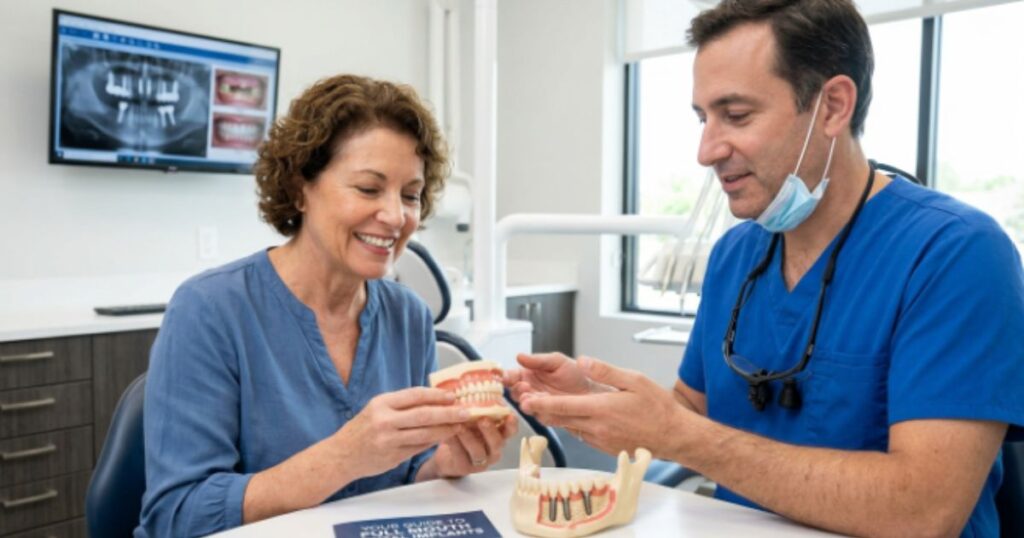
Choosing full mouth dental implants is about much more than replacing missing teeth. It is an investment in your health, confidence, and daily comfort. Unlike many other tooth replacement options, implants become part of your jaw and function much like natural teeth. They allow you to enjoy meals, speak clearly, and smile without worrying that your teeth will slip or shift. Modern techniques have made implant treatment safer and more predictable than ever, which is why millions of Americans now choose implants instead of traditional dentures.
At the same time, no dental treatment is perfect for everyone. Implant therapy requires surgery, healing time, and a financial commitment. Understanding both the advantages and possible drawbacks helps you make a confident decision. When you know what to expect before treatment begins, you can prepare for the journey and improve your chances of long-term success.
Top Benefits of Full Mouth Dental Implants
One of the greatest benefits of full mouth dental implants is the ability to restore everyday life. Many patients notice improved chewing within weeks after treatment. Foods that once felt impossible to eat become enjoyable again. Crisp apples, fresh vegetables, steak, and nuts often return to the menu without the discomfort associated with loose dentures. Patients also experience improved speech because fixed teeth stay securely in place while talking.
Implants also improve appearance and confidence. They create a beautiful natural smile, support facial support, and help prevent the sunken look that often develops after tooth loss. Because implants stimulate the jawbone, they encourage bone preservation and reduce future bone shrinkage. This creates a long-lasting solution that delivers durable tooth replacement, comfortable replacement teeth, stable teeth, and a permanent smile that can last for decades with proper care.
Possible Risks and Complications
Like every surgical procedure, dental implant surgery carries certain risks. Most patients recover without serious problems. However, understanding possible complications allows you to prepare and follow your dentist’s instructions carefully. Temporary discomfort, mild swelling, and soreness are common during the first few days after surgery.
Although uncommon, complications such as implant failure, infection risk, bleeding after implant surgery, swelling after implants, nerve damage, sinus complications, prosthetic repairs, and other healing complications may occur. Choosing an experienced oral surgeon, following excellent oral hygiene, attending regular follow-up appointments, and avoiding smoking greatly reduce these risks.
Full Mouth Dental Implants vs Dentures
Many patients compare dental implants vs dentures before making a decision. While traditional dentures remain a practical choice for some people, they can become loose over time and often require adhesives for stability. They also do not stimulate the jawbone, which means bone loss continues after teeth are removed.
The discussion around fixed dentures vs removable dentures often leads patients toward implants because they offer greater comfort and stability. Likewise, comparing permanent implants vs traditional dentures shows that implants feel more like natural teeth and usually require fewer adjustments over time. Patients considering implant-supported dentures vs conventional dentures often appreciate the stronger bite, improved appearance, and greater confidence that implants provide.
Long-Term Success Rate and Lifespan
Dental implants have one of the highest success rates in modern dentistry. According to the American Academy of Implant Dentistry (AAID), implant success rates often exceed 95% when treatment is properly planned and patients maintain good oral care. You can learn more at Success depends on several factors, including overall health, bone quality, and daily maintenance.
Patients frequently ask what is the success rate of dental implants, how long do full mouth dental implants last, and can full mouth implants fail. The answer depends largely on lifestyle and maintenance. With excellent implant maintenance, regular dental visits, and consistent brushing and flossing, many implants remain healthy for twenty years or longer. Some even last a lifetime.
Are Full Mouth Dental Implants Worth It?
One of the most common questions patients ask is are full mouth dental implants worth it. For many people, the answer is yes because implants improve both oral health and quality of life. They allow patients to eat comfortably, smile naturally, and enjoy social situations without worrying about loose dentures.
Although implants require a larger investment at the beginning, they often save money over time because they usually need fewer replacements than removable appliances. For patients looking for the best full mouth dental implants, the combination of durability, comfort, and long-term performance makes them one of the most valuable treatments available in modern dentistry.
| Benefits | Potential Drawbacks |
| Natural appearance | Higher upfront cost |
| Strong chewing ability | Requires surgery |
| Long-lasting results | Healing takes several months |
| Prevents bone loss | Not everyone qualifies immediately |
| Fixed and stable teeth | May require bone grafting |
| Better speech and confidence | Regular maintenance is still necessary |
Full Mouth Dental Implants Cost and Factors That Affect Pricing
The cost of full mouth dental implants is often the first question patients ask during their consultation. While implants usually cost more than dentures, they also provide greater stability, durability, and long-term value. Instead of viewing implants as a short-term expense, many patients consider them an investment that protects their oral health for many years. The final price depends on your unique dental condition rather than a single standard fee.
Every patient receives a customized treatment plan. Some people only need straightforward implant placement, while others require additional procedures before surgery can begin. Understanding the different expenses involved helps you plan your budget and avoid unexpected costs later in the treatment process.
Average Cost of Full Mouth Dental Implants in the USA
The average cost of full mouth dental implants in the United States generally ranges from $20,000 to $60,000 or more for one or both arches, depending on the complexity of treatment. Premium materials, advanced technology, and the experience of the dental team all influence the final price. Procedures involving All-on-4 dental implants or All-on-6 dental implants may cost differently because they use different numbers of implants and restorative components.
Patients also compare the cost of All-on-4 implants with other treatment options. While All-on-4 often costs less than replacing every missing tooth with individual implants, the exact price varies by location, materials, and additional procedures. Your dentist will provide a personalized estimate after completing your examination.
What Affects the Total Cost?
Several factors affecting implant cost determine your final treatment price. The condition of your mouth plays a major role. Patients with healthy bone and gums usually require fewer procedures than those with severe bone loss or active infection. The type of restoration, the number of implants, and the experience of the dental specialist also influence the total investment.
Technology also affects pricing. Clinics using guided implant surgery, computer-guided implant placement, digital smile design, and advanced laboratory techniques often provide greater precision and improved long-term results. Although these technologies may increase costs slightly, they often improve treatment accuracy and patient satisfaction.
Additional Procedures That May Increase Costs
Some patients require additional treatment before implants can be safely placed. Procedures such as tooth extraction, treatment for gum disease, a bone graft, or advanced bone grafting may increase the overall treatment cost. These procedures prepare the mouth for successful implant placement and improve long-term stability.
Patients with severe bone loss may also require sinus lift surgery or specialized implant techniques before receiving implants. While these additional treatments add to the total investment, they create a stronger foundation that greatly improves the success of the final restoration.
Cost Comparison: All-on-4 vs All-on-6
When comparing All-on-4 vs All-on-6, many patients focus on both performance and price. All-on-4 generally uses fewer implants, which may reduce surgical time and overall treatment costs. It remains one of the most popular options for full-arch restoration because it provides excellent stability with fewer implants.
All-on-6 usually costs more because it requires two additional implants and slightly more complex restorative work. However, the added support can improve force distribution and may provide greater long-term durability for patients with strong jawbone structure and higher biting forces.
| Treatment Option | Typical USA Cost Range |
| Single Dental Implant | $3,000–$6,000 |
| All-on-4 dental implants (One Arch) | $15,000–$30,000 |
| All-on-6 dental implants (One Arch) | $20,000–$35,000 |
| Full Mouth Dental Implants (Both Arches) | $30,000–$60,000+ |
Prices vary by state, provider experience, materials, and individual treatment needs.
Are Full Mouth Dental Implants a Long-Term Investment?
When evaluating treatment costs, it helps to think beyond the initial payment. Dentures often require adjustments, relines, or replacement over time. In contrast, implants provide a more permanent solution that typically requires fewer major repairs when patients maintain excellent oral care.
Many dental practices now offer dental implant financing, flexible payment plans, healthcare financing, and even dental savings plans to make treatment more affordable. Some providers also include an implant warranty for added peace of mind. Patients searching for affordable full mouth dental implants should compare treatment quality, provider experience, technology, and long-term value rather than choosing based only on the lowest advertised price.
Does Insurance Cover Full Mouth Dental Implants?
Many people believe they cannot afford full mouth dental implants because of the cost. However, insurance benefits and financing programs can reduce the financial burden. Coverage depends on your insurance provider, your treatment plan, and the reason you need implants. Some plans classify implants as a major restorative treatment, while others consider them elective. That is why reviewing your policy before treatment begins is always a smart step.
Your dental office can often help you understand your benefits before surgery. Most implant practices work directly with insurance companies to estimate your out-of-pocket costs. They can also explain financing options if your policy only covers part of the treatment. Taking time to explore every payment option makes this life-changing procedure much more manageable.
What Most Dental Insurance Plans Cover
Most private dental plans provide limited insurance coverage for implant treatment. While many policies do not pay the full cost of implants, they may cover related procedures such as examinations, X-rays, tooth extraction, or parts of the implant restoration. Some plans also contribute toward crowns or the implant-supported prosthesis, depending on the benefits included in your policy.
Coverage varies widely between providers, so there is no single answer for every patient. Before scheduling surgery, ask your insurance company for a written explanation of benefits. Your dental office can usually submit a pre-treatment estimate, allowing you to understand your expected expenses before treatment starts.
Medicare and Medicaid Coverage
Many older adults ask whether Medicare dental implants are covered. In most situations, Original Medicare does not pay for routine dental implants because they are considered dental rather than medical treatment. However, certain medically necessary procedures connected to hospitalization may qualify for limited benefits. Updated information is available from the Centers for Medicare & Medicaid Services at .
Coverage for Medicaid dental implants depends on the state where you live. Some states provide limited dental benefits for adults, while others offer little or no implant coverage. Since Medicaid rules differ across the United States, checking your state’s program before treatment is essential.
Financing Options and Monthly Payment Plans
If insurance does not cover your full treatment cost, financing can make implants much more affordable. Many dental offices offer dental implant financing with flexible monthly payment plans that spread the cost over several months or even years. Instead of paying the entire amount at once, patients can choose manageable monthly payments that fit their household budget.
Many practices also partner with companies that specialize in healthcare financing. Approval often depends on credit history, income, and the financing program selected. Some plans even provide promotional interest-free periods for qualified borrowers, making treatment easier to afford.
Using HSA and FSA for Dental Implant Costs
Patients with employer-sponsored health benefits often have access to HSA and FSA accounts. These tax-advantaged accounts allow you to use pre-tax dollars for many qualified healthcare expenses, including certain dental treatments. Using these funds can reduce your overall out-of-pocket costs because you pay with money that has not been taxed.
Before using your account, confirm which expenses qualify under your plan. Your dental office can usually provide detailed treatment estimates and receipts that help support reimbursement requests. This simple step can save hundreds or even thousands of dollars during treatment.
Tips to Reduce Your Out-of-Pocket Expenses
Planning ahead can significantly reduce the total amount you pay for full mouth dental implants. Comparing experienced implant providers, reviewing multiple financing options, and understanding your insurance benefits all contribute to smarter financial decisions. Choosing a highly qualified provider may also lower future repair costs by improving long-term treatment success.
Patients should also ask about seasonal promotions, bundled treatment packages, and available dental savings plans. While it is natural to look for lower prices, selecting a skilled implant team with advanced technology often delivers better value than choosing the cheapest option. Quality treatment usually leads to fewer complications and longer-lasting results.
| Payment Option | How It Helps |
| Private Dental Insurance | May cover exams, extractions, or restorations |
| Medicare dental implants | Limited coverage in specific situations |
| Medicaid dental implants | Depends on individual state programs |
| Dental implant financing | Monthly payment options |
| Healthcare financing | Third-party financing with flexible terms |
| HSA and FSA | Tax-free funds for eligible dental expenses |
| Dental savings plans | Discounted treatment at participating providers |
Recovery, Aftercare, and Long-Term Maintenance
The success of full mouth dental implants depends not only on the surgery but also on the care you provide afterward. The first few weeks allow your body to begin healing, while the following months help the implants bond securely with your jawbone. Following your dentist’s instructions during recovery greatly improves comfort and lowers the risk of complications. Although the healing process requires patience, most patients return to normal daily activities much sooner than expected.
Long-term success also depends on consistent care after healing is complete. Dental implants cannot develop cavities like natural teeth, yet the surrounding gums and bone still require regular attention. Daily cleaning, professional checkups, and healthy lifestyle habits help protect your investment for many years.
What to Expect During Recovery
The first few days after surgery usually involve mild soreness, swelling, and minor discomfort. Most patients manage these symptoms with prescribed or over-the-counter medication. Applying cold packs and resting during the first twenty-four to forty-eight hours can also improve comfort. Every patient’s recovery process is different, although most people notice gradual improvement within the first week.
Your dentist will explain your personal healing timeline before you leave the office. During this period, your jawbone begins osseointegration, allowing the implants to fuse naturally with the surrounding bone. This process forms the strong foundation that supports your permanent teeth for many years.
Foods to Eat After Implant Surgery
Your diet plays an important role during implant recovery. Soft foods protect the surgical sites while allowing your mouth to heal comfortably. Foods such as yogurt, mashed potatoes, scrambled eggs, oatmeal, soup, smoothies, cottage cheese, and soft pasta are usually excellent choices during the first several days.
As healing progresses, your dentist gradually allows firmer foods. Avoid chewing ice, hard candy, nuts, or sticky foods until your implants have fully healed. Eating the right foods helps reduce pressure on the implants and supports healthy implant healing.
Daily Oral Care for Long-Lasting Implants
Excellent oral hygiene remains the most important habit for protecting your implants. Brush twice each day using a soft toothbrush and clean carefully around the gumline. Flossing or using specialized implant cleaning tools removes plaque from areas that regular brushing cannot reach.
Proper dental implant maintenance also includes regular professional cleanings. Although implants cannot decay, plaque and bacteria can still irritate the surrounding gums. Keeping your mouth clean helps prevent inflammation and supports healthy tissues around the implants.
Follow-Up Visits and Professional Cleanings
Routine follow-up appointments allow your dentist to monitor healing and identify small problems before they become serious. During these visits, the dental team checks the implants, surrounding gums, bite alignment, and overall function of your restoration. Professional cleanings also remove hardened plaque that cannot be removed at home.
Even after complete healing, regular dental visits remain essential. Most patients benefit from examinations and professional cleanings every six months, although some individuals with complex dental histories may require more frequent appointments.
Warning Signs That Need Immediate Dental Attention
Most implant patients recover without difficulty. However, you should contact your dentist immediately if you notice severe pain, excessive bleeding, persistent swelling, fever, or unusual discharge around the implants. Early treatment often prevents minor issues from becoming major complications.
You should also seek professional care if your restoration feels loose or your bite suddenly changes. Prompt attention can reduce the risk of implant failure and protect the long-term stability of your new smile.
How Long Do Full Mouth Dental Implants Last?
Patients often ask how long do full mouth dental implants last because they want to understand the long-term value of treatment. With proper care, the implant posts themselves can often last several decades and, in many cases, even a lifetime. The replacement teeth may eventually require maintenance or replacement because of normal wear, but the implants usually remain secure when supported by healthy bone.
The key to long-lasting results is consistency. Good oral hygiene, regular implant maintenance, routine dental visits, a healthy diet, and avoiding tobacco all contribute to exceptional long-term success. Patients who follow these recommendations often enjoy a confident smile and normal chewing ability for many years.
| Recovery Stage | What You Can Expect |
| First 24–48 Hours | Mild swelling and discomfort |
| First Week | Soft diet and reduced physical activity |
| First Month | Gradual improvement and gum healing |
| 3–6 Months | Complete osseointegration and implant stability |
| Long-Term | Regular cleanings and ongoing dental implant maintenance |
Final Thoughts
Full mouth dental implants have transformed the way dentists treat extensive tooth loss. They do much more than replace missing teeth. They restore confidence, improve daily comfort, protect jawbone health, and help people enjoy life without worrying about loose or uncomfortable dentures. Whether you choose All-on-4 dental implants, All-on-6 dental implants, or another full-arch solution, modern implant dentistry provides a dependable path toward a healthier smile that looks and feels natural.
Before making your decision, schedule a consultation with an experienced implant dentist who uses advanced imaging and personalized treatment planning. Every smile is unique, so your treatment should be too. By understanding the procedure, comparing your options, preparing for recovery, and committing to long-term care, you can make an informed choice that supports your oral health for many years. With the right provider and consistent maintenance, full mouth dental implants can become one of the best investments you ever make in your smile and your overall quality of life.
FAQ’s About Full Mouth Dental Implants
What is the average cost of whole mouth dental implants?
The average cost of full mouth dental implants in the U.S. ranges from $20,000 to $60,000+, depending on the number of implants, materials, and additional procedures.
Are full mouth dental implants a good idea?
Yes. Full mouth dental implants provide a long-lasting, stable, and natural-looking solution that improves chewing, speech, comfort, and overall oral health.
How much do ClearChoice implants cost?
ClearChoice full mouth implant treatments typically range from $30,000 to $50,000 per arch, although the final cost varies by location and individual treatment needs.
How painful is a full mouth implant?
The procedure is performed under anesthesia, so you won’t feel pain during surgery. Mild soreness and swelling afterward are common and usually improve within a few days.
What is the downside of dental implants?
The main drawbacks are the higher upfront cost, the need for surgery, and a healing period that can take several months before the final teeth are placed.
People Read Also: 200+ Birthday Wishes for Lover to Express Your Love and Make Their Day Special

My name is M.Adil, I am specialize in creating thoughtful digital content that informs, inspires, and engages readers worldwide. Every piece is written with care and originality.